· amps · 7 min read
Pirate MIDI Polar Plus & Max: The Bridge the ToneX One Needed
I started with the Polar Plus, then upgraded to the Max. Here's why Pirate MIDI's footswitchable MIDI boxes turned my ToneX One into a real gigging rig.
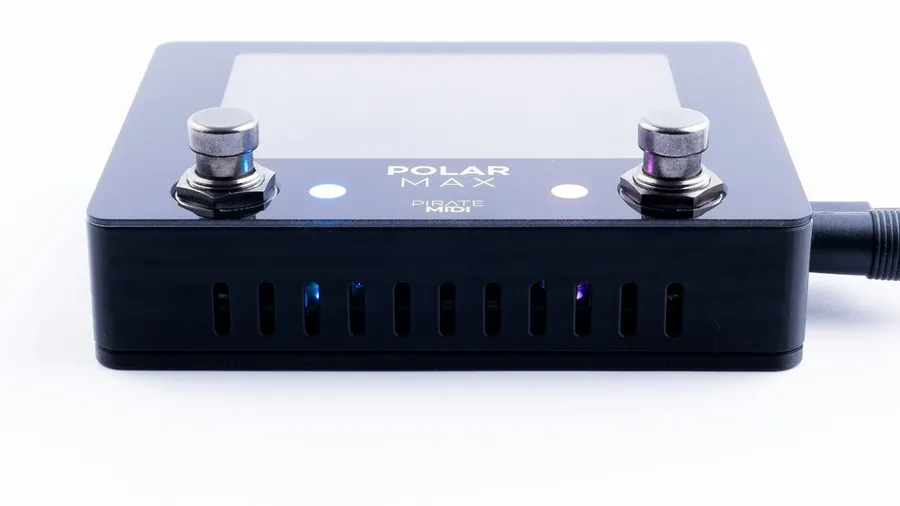
The ToneX One does something incredible. The amp modeling that IK Multimedia has packed into a pedal the size of a deck of cards is, to my ears, some of the best-sounding capture tech going right now. But anyone who’s actually played one live knows the catch: the default interface is the weak link. Switching presets means crouching down and toe-tapping through a single bank, there’s no proper MIDI jack, and folding it into a larger rig is a fight.
That gap — incredible engine, frustrating control — is exactly where Pirate MIDI’s Polar line comes in. It’s a small box that connects to the pedal over USB-C, powers it, and translates MIDI into the commands the pedal understands. In other words, it gives the ToneX One the footswitching and MIDI integration it should have shipped with.
I’ve now run both footswitch models. I started with the Polar Plus, and after a few weeks I was impressed enough that I upgraded to the Polar Max. Here’s how that played out.
What the Polar line actually does
Every Polar model shares the same core. You run a single USB-C cable from the Polar to your pedal, and that one connection handles both power and control. From there you get:
- A 3.5mm TRS (Type A) MIDI input for a wired controller
- A 3.5mm TRS (Type A) MIDI Thru to pass messages down the chain
- An ESP32 wireless module for Bluetooth or WiFi control from a compatible app or controller
- A custom 9V center-negative power circuit that plays nice with standard pedalboard supplies
Supported pedals are the ToneX, the ToneX One, and the Valeton GP-5. With any of them you can switch presets and tweak settings over MIDI — wired or wireless — without the original pedal ever offering a MIDI port of its own.
The version 2 hardware (released January 2026) added optical footswitching to the models with stomps. There are no mechanical contacts to wear out, which should mean a switch that outlasts the rest of the board. The v2 enclosures also got more compact.
Starting with the Polar Plus
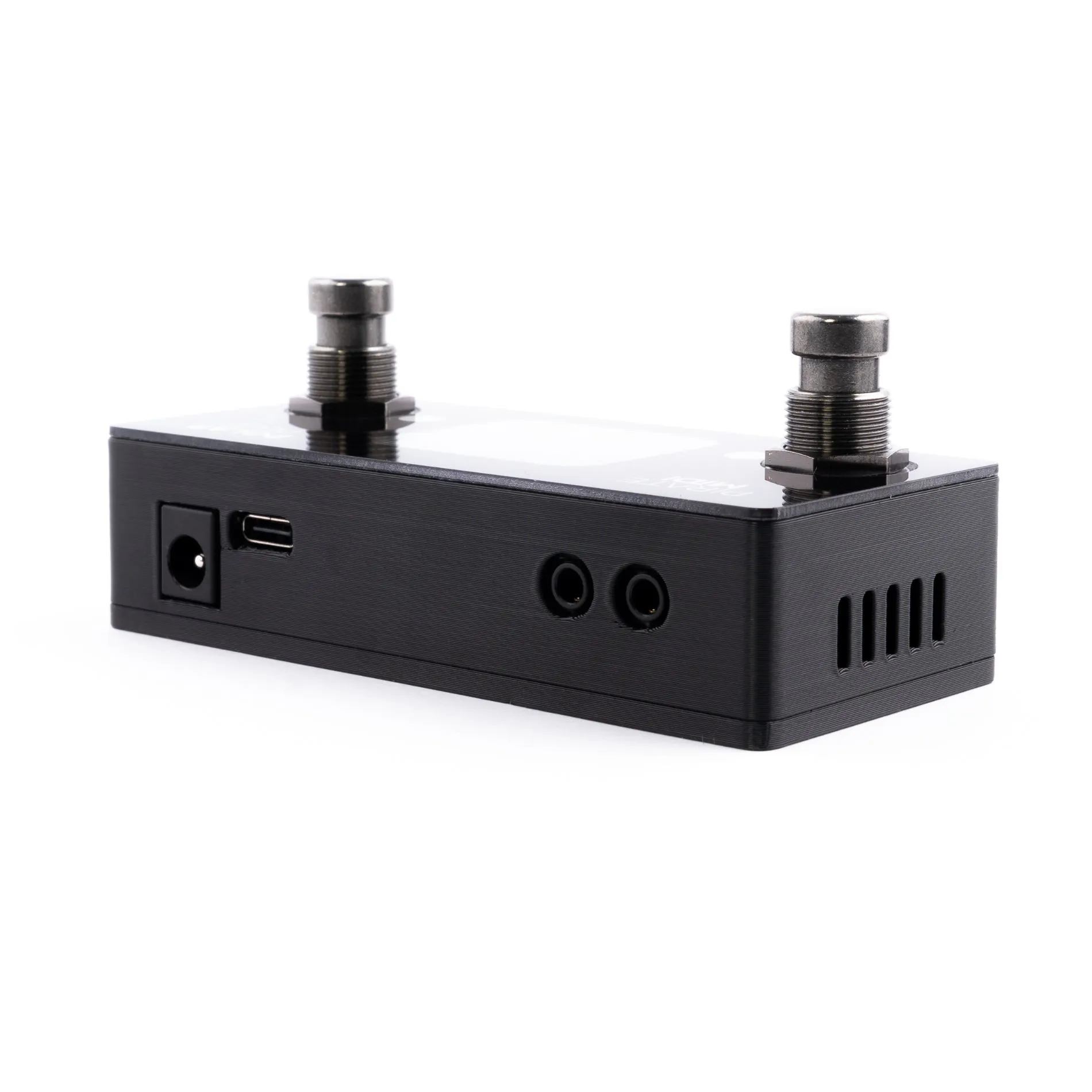 The Pirate MIDI Polar Plus — two optical footswitches and a small LCD in a box barely larger than the ToneX One it controls.
The Polar Plus is the smaller footswitch unit, in a tidy 100 x 41 x 46mm box. You get:
- A 1.69” non-touch LCD so you can see what preset you’re on
- Two optical footswitches for preset changes
- A 2.1mm DC jack and a modest 300mA draw
- Street price around $99
This was my entry point, and it immediately solved the problem I bought it for. Suddenly I could scroll presets up and down with my foot and actually see where I was — no more bending down mid-song. For a ToneX One on a compact board, the Plus is almost a no-brainer: it’s barely larger than the pedal it controls, the little screen keeps you oriented, and the low current draw won’t stress your supply. If your needs stop at “let me change presets with my feet,” the Plus is genuinely all you need.
Why I upgraded to the Polar Max
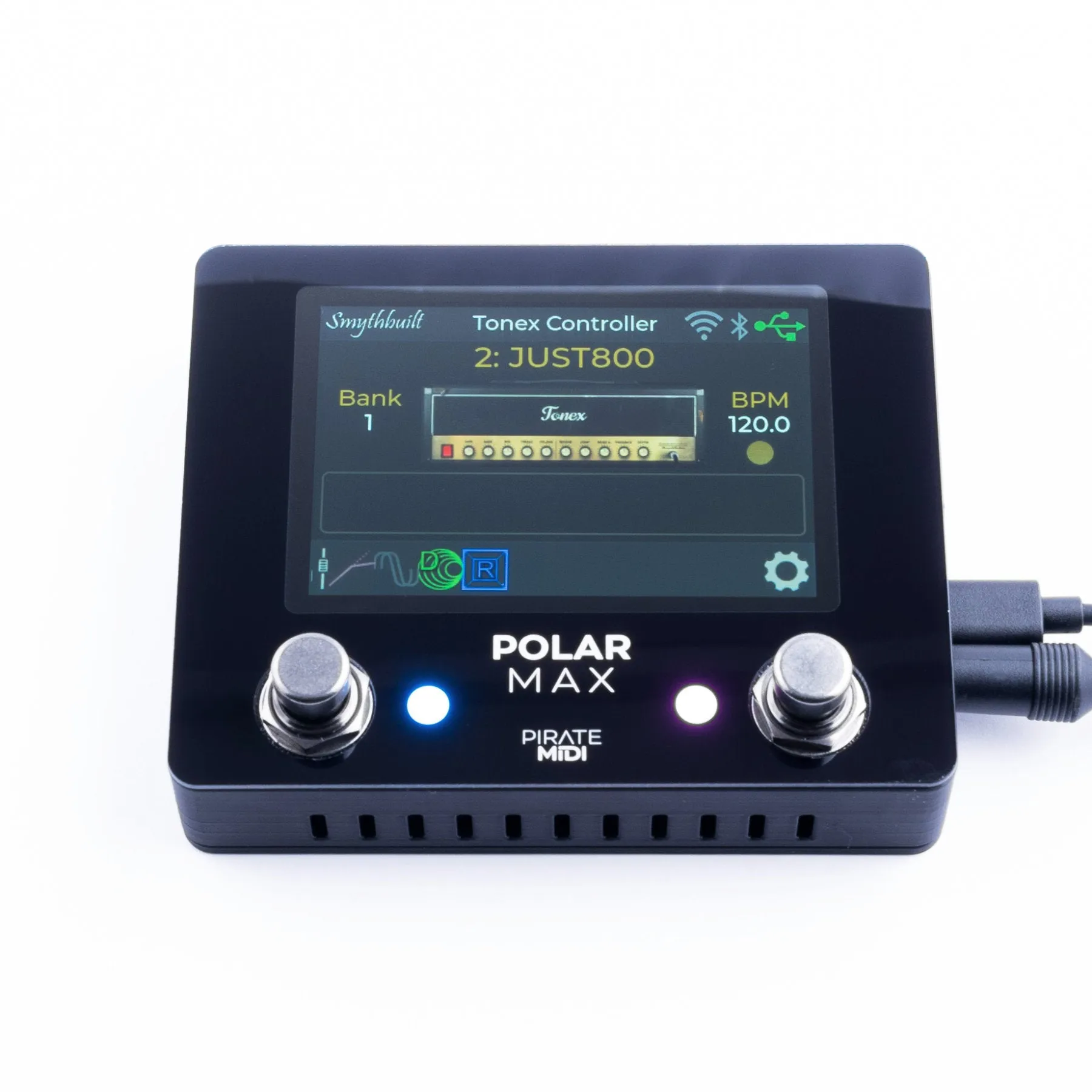 The Polar Max from above — the 3.5” LCD touchscreen turns it from a labeled switcher into a proper control surface.
After a few weeks with the Plus, I went for the Polar Max, and I don’t regret it. It’s a different animal — roughly a standard pedal footprint at 112 x 90mm — and the headline difference is the 3.5” LCD touchscreen. You still get the two optical footswitches, but that big touch display turns the Polar from a labeled switcher into a real control surface. Navigating is faster, the feedback is richer, and on a dark stage I’d take reading a 3.5” touchscreen over squinting at a 1.69” strip every time.
A couple of things to plan for if you go this route:
- It draws more power — 600mA minimum, 1A recommended — so give it a proper isolated output
- It uses the same 2.1mm DC jack
The screen and touch control are the whole reason to step up, and for me they were worth it. If you want the Polar to feel like the centerpiece of the rig rather than a small add-on, the Max is the one. Street price is around $159.
Plus vs. Max at a glance
| Polar Plus | Polar Max | |
|---|---|---|
| Size | 100 x 41 x 46mm | 112 x 90 x 46mm |
| Screen | 1.69” non-touch LCD | 3.5” LCD touchscreen |
| Footswitches | 2 optical | 2 optical |
| Power draw | 300mA | 600mA min / 1A recommended |
| Power jack | 2.1mm DC | 2.1mm DC |
| Wired + wireless MIDI | Yes | Yes |
| Price | ~$99 | ~$159 |
For the record, the line also includes the Pico ($59, no screen, no switches) and the Mini ($79, small screen, no switches) if you only need MIDI translation and plan to trigger everything from an external controller or app.
The bigger picture: one set of tones, every device
Here’s what really makes this click for me. I also own the ToneX Plug, IK’s pocket-sized headphone amp, and it runs on the same TONEX engine and the same Tone Models as the ToneX One. That means the captures I love live across my whole setup — silent practice on the Plug through headphones, and the same voicings on the pedalboard through the ToneX One.
The thing that always held the pedal side back wasn’t the sound; it was control. The Polar fixes that. So now I get consistent, studio-quality tones across multiple devices, and on the gigging end I can finally drive them like a proper rig. That combination — IK’s modeling for the sound, Pirate MIDI for the bridge — is the setup I wish I’d had from the start.
The honest caveat worth knowing
Before you spend money, know this part. The ToneX One doesn’t officially support MIDI. Pirate MIDI gets around that by translating USB messages — essentially the same commands the ToneX app sends — and firing them off via MIDI through onboard code. It’s a reverse-engineered approach, the same one the community has used, and it works reliably today. The identical method enables control of the full-size ToneX pedal and the Valeton GP-5.
The risk: a future firmware update from IK Multimedia (or Valeton) could change the underlying protocol and break it. The open-source project behind these boxes has kept pace with changes so far, but nobody can promise it always will. Because the functionality leans on that third-party project, Pirate MIDI is upfront that they can’t offer returns or refunds if a future pedal update breaks compatibility. That’s a fair disclosure, and worth weighing if you’re the type to update firmware the day it drops.
The open-source angle
One detail I appreciate: the firmware powering these devices is open source, written by developer Greg Smith, and Pirate MIDI sends 10% of all Polar sales revenue directly to him to support ongoing development. In a market full of locked-down black boxes, backing the person maintaining the code feels like the right kind of arrangement.
So which one?
My own path tells the story. The Polar Plus solved the core problem — footswitchable presets in the smallest possible package — and for a lot of players that’s the finish line. I upgraded to the Polar Max because the 3.5” touchscreen makes it a real control surface, and once you’ve used it, the small screen feels like a compromise. If you’re running a more involved MIDI setup or you just want the better display, go Max (and budget for a stronger power output).
Either way, the Polar line does something I didn’t fully appreciate until I lived with it: it takes a pedal that sounds world-class but fights you on integration and quietly makes it behave. For anyone building a streamlined modeling rig around the ToneX One, that’s a problem well worth solving.
Specs and pricing per Pirate MIDI’s product listing at the time of writing; confirm current pricing and availability before buying.